If you are getting ready to sell a Livermore estate, it is natural to wonder whether a remodel will help you earn more. The short answer is usually yes, but only in the right places and only when the local market supports the spend. For many estate sellers, the smartest path is not a full renovation. It is a focused, market-driven plan that improves first impressions, removes buyer concerns, and protects your net proceeds. Let’s dive in.
Why remodel decisions are different in Livermore
Livermore is not a one-size-fits-all market. In March 2026, Redfin reported a citywide median sale price of about $1.102 million, with homes selling in about 10 to 11 days and receiving about three offers on average. But the high-end picture shifts fast by submarket.
In South Livermore, where many estate-style properties compete, the median sale price was about $2.225 million and homes sold in about eight days. Northside Livermore was slower, with a median sale price of about $950,000 and about 22 days on market. That gap matters because your estate will be judged against its immediate comp set, not just the city average.
For unique homes on larger lots or acreage, buyer expectations also change. Outdoor space, condition, privacy, and functionality tend to play a larger role in how buyers respond. That is why broad advice like “always remodel before selling” often misses the mark for Livermore estate owners.
Start with the comp set
Before you commit to any project, look at the homes your property will truly compete against. Appraisal guidance from Fannie Mae says appraisers must analyze active listings, pending sales, and closed sales in the competitive market area. It also requires commentary on over-improvements when a home is larger or costlier than what is typical nearby.
That means a major remodel does not automatically translate into a higher sale price. If your finishes, additions, or outdoor features exceed what buyers are paying for in your specific Livermore micro-market, the market may not reward the full cost. In some cases, the work may help presentation but not fully increase appraised value.
For estate sellers, this is where local experience matters. A tailored market analysis can help you separate improvements that make your home more competitive from upgrades that simply make it more expensive to prepare.
What usually pays off before listing
The strongest pre-listing work is often visible, functional, and easy for buyers to understand. According to the 2025 Remodeling Impact Report from NAR, sellers and agents most often recommended painting and addressing the roof before listing. The same research showed strong estimated resale recovery for projects like front door replacement, closet renovation, window replacement, and certain kitchen updates.
For most Livermore estates, these lower-drama improvements are the first place to look:
- Deep cleaning
- Decluttering
- Depersonalizing
- Minor repairs
- Fresh interior paint
- Front entry cleanup
- Landscape maintenance
These projects matter because buyers are paying close attention to condition. NAR reported that 46% of buyers are now less willing to compromise on condition than in the past. If your home feels well cared for from the moment a buyer arrives, you reduce objections and improve the odds of strong early interest.
Focus on condition before customization
If you only have room in the budget for some updates, prioritize repairs and refreshes over personal design choices. Freddie Mac’s seller-prep guidance points sellers toward deep cleaning, decluttering, depersonalizing, fixing obvious problems, and staging the home so buyers can picture themselves living there.
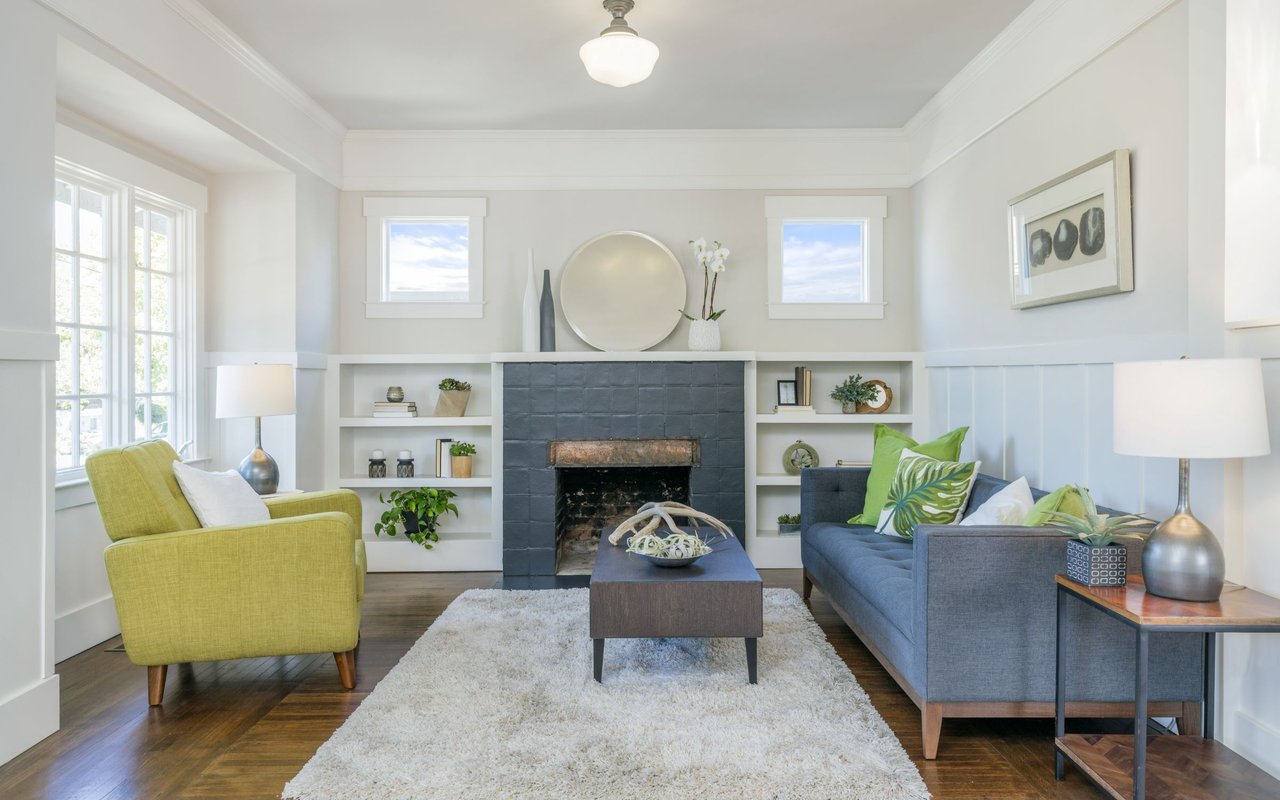
That advice fits Livermore estates especially well. Buyers in this segment often notice deferred maintenance quickly, whether it is worn flooring, dated paint, a tired entry, or visible roofing concerns. These issues can make a home feel heavier than it is, even if the lot, layout, and location are strong.
A clean, repaired, lightly updated property gives buyers confidence. It signals that the home has been cared for, and that can support stronger offers with less hesitation.
Kitchen and bath updates need a light touch
Kitchens and bathrooms matter, but not every estate seller needs a full remodel. NAR found that both complete kitchen renovations and minor kitchen upgrades had estimated resale recovery of about 60%. Bathroom additions were lower, at 56%.
That does not mean kitchen or bath work is a bad idea. It means scope matters. In many cases, a targeted refresh can do more for your bottom line than a full gut renovation.
A smart pre-listing refresh may include:
- Cabinet hardware updates
- Fresh paint
- New light fixtures
- Refinished or replaced worn surfaces
- Improved storage presentation
- Repairing dated or visibly damaged finishes
If comparable Livermore estate sales support a bigger kitchen or bath investment, it may be worth considering. If not, a lighter update often gives you the visual lift you need without risking over-improvement.
Outdoor presentation can carry extra weight
For estate and acreage properties, the grounds are part of the product. Buyers are not just evaluating the house. They are reacting to the approach, the setting, the outdoor use, and how the property feels as a whole.
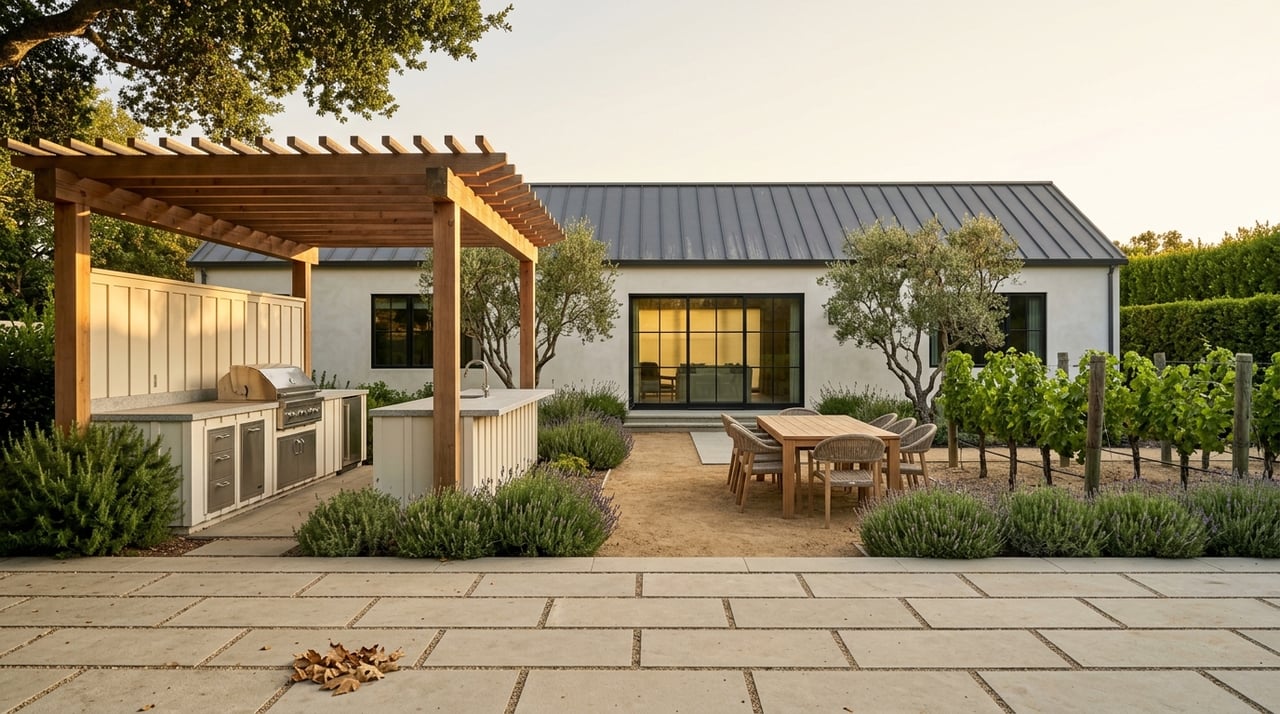
NAR’s outdoor features research found that 92% of REALTORS® suggest curb appeal improvements before listing, and nearly all said curb appeal is important to buyers. Estimated recovery was especially strong for landscape maintenance, standard lawn care, overall landscape upgrades, patios, decks, and outdoor kitchens.
That does not mean you should rush into a large outdoor build. It does mean your exterior presentation deserves real attention. In South Livermore and similar estate pockets, cleaned-up landscaping, trimmed trees, refreshed hardscape, and polished entertaining areas can shape buyer perception in a major way.
Outdoor projects that often make sense
For many Livermore estate sellers, practical outdoor work is more valuable than flashy additions. Consider improvements that help the property feel maintained, usable, and visually cohesive.
Often worthwhile before listing:
- Landscape maintenance
- Lawn care service
- Seasonal cleanup
- Mulching and plant bed refresh
- Entry and driveway cleanup
- Patio or deck touch-ups
- Repairing obvious exterior wear
More caution is usually needed with expensive additions. NAR estimated only 56% recovery for adding an in-ground pool, which is a good reminder that a large project is not always the best resale move. If the feature is not typical for your immediate market, buyers may enjoy it without paying enough extra for it.
Watch out for over-improvement
This is where many sellers lose money. A dramatic remodel may feel like a value add, but appraisers are required to reflect contributory value, not just cost. If the work goes beyond what the market recognizes, you may not recover what you spent.
That risk can be even greater for acreage homes, unusual sites, or non-standard estates. Fannie Mae notes that for these properties, appraisers must pay special attention to site size, zoning, utilities, access, and highest-and-best-use issues. In practical terms, highly customized work can make the home more impressive without making it more marketable at a higher number.
Projects that are often riskier before listing include:
- Full kitchen gut remodels
- Room additions
- New pools
- Highly customized outdoor structures
- Luxury finishes that exceed local expectations
If the immediate comp set clearly supports the improvement, the answer may be different. But without that support, it is often wiser to spend on presentation and condition instead.
Timing and permits matter more than many sellers expect
Even a good remodel can become a problem if it delays your launch or creates permit issues. The City of Livermore handles permits online only, with no over-the-counter service and no expedited plan review. That can affect your timeline if you are hoping to move quickly.
The city also states that certain common projects require permits. Window replacement requires a permit. Replacing a pre-hung front door requires a permit. Sheds, patio covers, or arbors over 120 square feet, or attached to a building, also require a permit.
If work is in the public right of way, an encroachment permit is required. The city also requires a smoke and carbon monoxide detector affidavit for residential additions, alterations, or repairs valued over $1,000. For sellers on a market timeline, these details can turn a “simple upgrade” into a longer pre-listing process.
A practical decision framework for estate sellers
If you are deciding whether to remodel before selling your Livermore estate, use this simple filter.
Do the work if it removes objections
Give strong consideration to projects that fix visible issues, improve cleanliness, or make the home feel move-in ready. Buyers notice these items quickly, and they can influence both price and negotiation strength.
Do the work if buyers can easily value it
Straightforward upgrades such as paint, front entry refresh, basic landscaping, minor kitchen improvement, and repair work are easier for buyers and appraisers to understand. These tend to support stronger presentation without pushing the home outside the market norm.
Pause if the project is highly personalized
If the remodel reflects your taste more than current buyer expectations, be careful. The more specific and expensive the choice, the higher the risk that buyers will not assign equal value.
Pause if permits or timing will slow your sale
A project that sounds worthwhile on paper may still be the wrong move if permit timing is uncertain. In a competitive Livermore market, missing the best listing window can cost more than a modest cosmetic issue.
The best answer is usually selective, not sweeping
For most Livermore estates, the best pre-sale strategy is selective improvement, not blanket remodeling. The market data supports thoughtful preparation, especially when it improves condition, curb appeal, and buyer confidence. It does not support the idea that every major renovation will pay off.
If you want the strongest result, start with the immediate comp set, the likely appraisal logic, and the real timeline required for any work. That kind of planning helps you protect your net proceeds while presenting the property at its best.
When you are preparing to sell a unique estate, ranch, or acreage property, details matter. The Kristy Peixoto Team offers white-glove guidance, local market analysis, and bespoke preparation strategies tailored to Livermore’s high-value homes.
FAQs
Should you remodel before selling a Livermore estate?
- Usually, selective updates make more sense than a full remodel. Cleaning, repairs, paint, and landscape maintenance often provide better value than major customized projects.
What improvements add the most value before selling in Livermore?
- Research supports visible, functional updates like deep cleaning, decluttering, fresh paint, roof attention, front entry improvements, and landscape maintenance as strong pre-listing priorities.
Are kitchen remodels worth it for Livermore estate sellers?
- Sometimes, but scope matters. A minor kitchen upgrade may be more practical than a full gut remodel unless comparable local sales clearly support a larger investment.
Do outdoor improvements matter for Livermore estate homes?
- Yes. For estate and acreage properties, curb appeal, landscaping, and usable outdoor spaces can strongly influence buyer perception and overall presentation.
Do Livermore sellers need permits for pre-listing work?
- Some common projects do require permits in Livermore, including window replacement and replacing a pre-hung front door. Permit timing should be part of your planning before starting work.
Can a major remodel hurt your return before selling a Livermore estate?
- Yes. If the project exceeds what buyers typically pay for in your immediate market, it may be treated as an over-improvement and may not return its full cost in price or appraisal value.