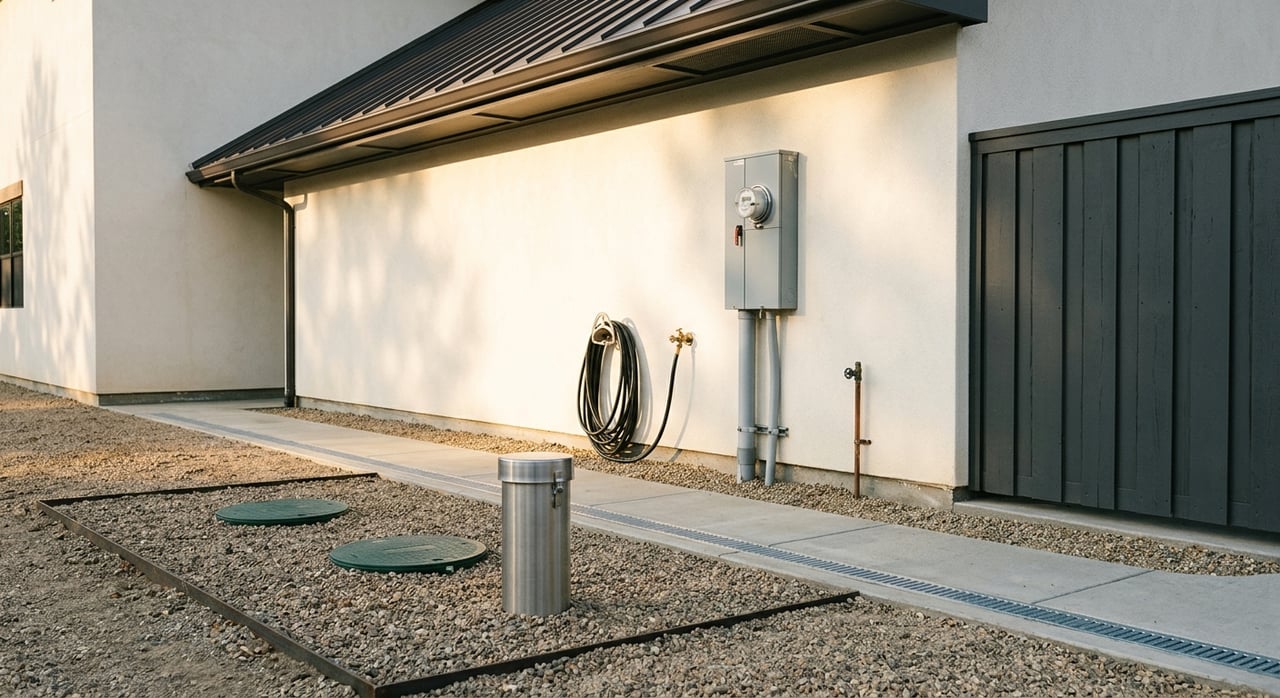
Buying in Palomares Canyon can feel different from buying in a typical neighborhood, and that is exactly why infrastructure deserves your attention early. A beautiful home on acreage may also come with a private well, septic system, shared or private road responsibilities, and easement constraints that affect how you use the land. If you are considering a purchase here, understanding the basics can help you avoid surprises, budget more confidently, and make a stronger decision. Let’s dive in.
Why infrastructure matters in Palomares Canyon
Palomares Canyon is one of Alameda County’s more semi-rural areas, and infrastructure is often parcel-specific rather than neighborhood-wide. According to Alameda County’s OWTS Local Agency Management Program, the area includes 2,818 gross acres, 196 developed parcels with OWTS, and a median parcel size of 4.4 acres. The same county materials note that developed areas in Palomares Canyon continue to rely exclusively on private septic systems, which makes due diligence especially important for buyers of acreage properties.
That means you should not assume two nearby properties function the same way. Lot size alone does not answer questions about water, wastewater, access, slope, soils, or easements. In many cases, the condition of the well, septic system, road access, and power setup matters just as much as the home itself.
Wells and water basics
If a Palomares Canyon property is served by a private well, you will want to look beyond whether the water simply turns on. A well is part of the property’s core infrastructure, and its permitting history, water quality, and production can all affect your experience as an owner.
Alameda County Public Works well permit requirements show that well drilling permits are handled locally, with a current fee of $660 per well. Applications must be submitted at least 10 work days before the planned start date, and they require well specifications, property-owner information, and a project site map.
State guidance from the California Department of Water Resources also makes clear that new wells and well decommissioning should be permitted locally, and water well work must be completed by a licensed C-57 well driller. DWR further recommends keeping wells separated from septic systems and other pollutant sources, along with annual inspection and regular water-quality testing.
What to verify about a well
Before you move forward, ask for records that help confirm the well’s condition and history. A seller may already have some of these documents, and county files may help fill in gaps.
- Well permit file or well completion report
- Recent water test results
- Flow or yield test results
- Age of the pump and pressure tank
- Details on any water treatment equipment
Alameda County’s drinking-water program resources note that the county can provide water quality and quantity certifications when potability must be documented for well-water projects. The county can also sample drinking water for coliform and E. coli, and its testing packet references bacteria and chemical standards, flow tests, and local labs and drillers.
Old wells can create risk
If a parcel includes an unused well, do not ignore it. According to the California Department of Water Resources, the property owner is responsible for properly destroying an abandoned well because it can become a pathway for contamination.
For buyers, this matters because an older rural parcel may have infrastructure that is no longer visible or in use. A careful file review and property walkthrough can help uncover those issues before closing.
Septic basics in Palomares Canyon
In Palomares Canyon, private septic is the rule, not the exception. Alameda County’s OWTS program coordinates permitting for onsite wastewater treatment systems, and county regulations set minimum standards for safe treatment and disposal of private sewage.
The Alameda County OWTS program confirms that new or replacement septic systems require permitting through the local jurisdiction or the regional water board. For buyers, that means septic due diligence is not just a box to check. It is a central part of understanding the property.
What buyers should know about inspections
Alameda County’s LAMP explains that an existing system must undergo a performance evaluation when a site-development or building permit is requested. It also states that standard systems are subject to a basic inspection plus a homeowner questionnaire every five years.
That is especially important if you plan to remodel. If you want to add bedrooms, bathrooms, or square footage, the county may require a review of the existing septic system and potentially corrective work or new permits.
Septic maintenance and repair costs
Septic systems need routine care, even when they appear to be working normally. Alameda County’s LAMP estimates that septic tank pumping occurs roughly once every 3 to 4 years on average countywide, although the actual timing depends on household size, tank capacity, and system condition.
If a system is failing or close to failure, the county can require corrective action. The LAMP describes phased responses that may include pump-and-haul, tank repair or replacement, monitoring wells, and dispersal-system redesign.
Smart septic questions to ask
A good septic review starts with records and recent servicing history. These questions can help you understand what you are buying.
- Is there a permit file and as-built drawing?
- When was the tank last pumped or inspected?
- Has the system ever been repaired, expanded, or replaced?
- Would a planned remodel trigger a county review or upgrade?
Alameda County also offers septic system file reviews, which can help you confirm permit history, as-builts, pumping records, or past repairs. For a buyer in Palomares Canyon, this is often one of the most useful pre-offer steps.
Roads, access, and easements
One of the biggest differences between semi-rural and suburban property is access. In Palomares Canyon, you should confirm not only how you reach the home, but also who maintains the road and what legal rights or obligations come with it.
Alameda County road information explains that county roads and rights-of-way are maintained in unincorporated areas, while private streets are a separate category. County planning materials note that private streets may require a maintenance agreement or HOA, and reserve funding for private-street upkeep may also be required in subdivision review.
Why access documents matter
Before writing an offer, it is wise to confirm legal access through the title report and parcel map. You also want to know whether there are shared maintenance obligations, drainage responsibilities, or recorded agreements that affect ongoing costs.
This is one area where acreage buyers can benefit from a more detailed review. A long driveway or private road may look straightforward, but ownership and maintenance responsibilities are not always obvious from a showing alone.
Power service and backup planning
Power is another practical piece of Palomares Canyon due diligence. PG&E serves Alameda County communities, and PG&E’s service-area information notes that the utility is actively undergrounding and hardening lines in the county. PG&E states that undergrounding reduces nearly all wildfire ignition risk on a line and can improve reliability, though some overhead equipment may still remain.
That said, power planning still matters in semi-rural terrain. PG&E also notes that it may shut off power during extreme weather or wildfire conditions, so backup-power planning is a practical part of evaluating a property.
Check utility easements early
According to PG&E easement guidance, buildings, wells, pools, and other obstructions cannot be placed within PG&E easements. If you are thinking about a detached garage, generator, replacement well, or driveway improvements, you should understand easement locations before making plans.
This can be especially important on hillside or irregular lots where usable space is already shaped by slope, setbacks, and access. A simple easement review can save time and prevent expensive redesign later.
A practical pre-offer checklist
If you are serious about a Palomares Canyon purchase, it helps to assemble an infrastructure review early. This approach is especially useful for acreage and other non-standard properties, where systems and site conditions can have a major impact on ownership costs and future plans.
A strong pre-offer or early-escrow checklist may include:
- County septic file review
- Well permit or well-log records
- Recent water test results
- Flow or quantity documentation for the well
- Title report and parcel map showing access and easements
- Road maintenance agreement, HOA documents, or other private-road records
- Backup-power plan if the home depends on PG&E service
If you are planning an addition or other improvements, move the well and septic review up to the top of your list. County rules can require performance evaluations, corrections, or new permits when systems are altered or when site-development permits are involved.
The bottom line for buyers
In Palomares Canyon, infrastructure is part of the property story. A home may offer privacy, land, and a beautiful setting, but your experience as an owner will also depend on how the well, septic system, road access, easements, and power service function together.
That is why careful review matters. When you understand the basics before you buy, you can evaluate the property more clearly, plan your budget with fewer unknowns, and move forward with greater confidence.
If you are considering a home or land purchase in Palomares Canyon and want experienced, property-specific guidance, The Kristy Peixoto Team offers a white-glove, consultative approach built for unique East Bay acreage and foothill properties.
FAQs
What kind of wastewater systems do homes in Palomares Canyon usually have?
- Developed areas in Palomares Canyon rely exclusively on private septic systems, according to Alameda County planning and LAMP materials.
What well records should you request for a Palomares Canyon property?
- Ask for the well permit file or completion report, recent water test results, flow or yield test information, and the age of the pump, pressure tank, and any treatment equipment.
How often should a septic tank be pumped in Alameda County?
- Alameda County’s LAMP estimates septic tank pumping roughly every 3 to 4 years on average countywide, though the actual interval depends on household size, tank capacity, and system condition.
Why do access and road agreements matter for Palomares Canyon buyers?
- Some roads may be private rather than county-maintained, so you should confirm legal access, maintenance responsibility, drainage obligations, and any shared road agreements before closing.
Why should you review PG&E easements before buying in Palomares Canyon?
- PG&E says structures and certain improvements such as wells or pools cannot be placed within utility easements, so easement locations may affect where you can build or improve the property.